Symptom-Based Panel

Leaf Spot Panel

About this product

The Leaf Spot Pathogen Panel™ is designed to test for pathogens associated with foliar damage, including leaf spots, expanding lesions, and localized necrosis. This multiplex qPCR pathogen panel assay screens for Botrytis cinerea, Fusarium solani, and Pythium myriotylum in a single test, reducing guesswork, cost, and diagnostic time.

  • Botrytis cinerea
  • Fusarium solani
  • Pythium myriotylum

The Leaf Spot Pathogen Panel™ is a multiplex molecular diagnostic assay developed to investigate infectious causes of leaf spotting, blotches, expanding lesions, and dead tissue formation that cannot be attributed to physical damage or environmental stress alone. These symptoms often signal active infection and can progress rapidly if not accurately identified.

This panel simultaneously detects:

  • Botrytis cinerea, a fungal pathogen capable of initiating leaf lesions and spreading quickly under favorable humidity and airflow conditions.
  • Fusarium solani, which may contribute to localized necrosis, tissue collapse, and progressive foliar damage.
  • Pythium myriotylum, a root-associated pathogen that can indirectly cause foliar symptoms through systemic stress and impaired water uptake.

Using sensitive and specific qPCR technology, this panel provides reliable detection from a single sample with quick turnaround times. The Leaf Spot Pathogen Panel™ supports early differentiation between infectious and non-infectious causes of foliar damage, enabling timely and targeted management before lesions escalate.

Leaf Spot Panel

Pathogen Panel™

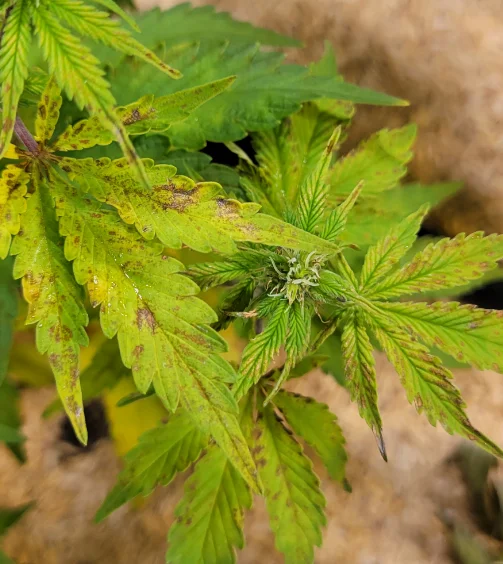
Spots, blotches, or dead tissue appear on leaves.

Common signals:

  • Brown or yellow spots
  • Expanding lesions
  • Localized necrosis

Features

Get results in less than 72 hours and quickly address any infection within your facility.

Simple and easy, send your samples quickly and with minimal hassle.

Access and review all the information obtained from your assays.

Results at Your Fingerprints

With MyFloraCLOUD, you can easily access and review cultivar-specific data and test analysis insights.

Statistics

Statistics

Track your data and visualize how it changes over time.

Accesibility

Accesibility

Login from any device - whether it’s your phone, home computer, or workstation - to see and download your results.

Security

Security

Rest easy knowing that your precious data is safely stored in our database.

Education

Education

Obtain educational materials and get in touch with our specialists.

Frequently Asked Questions

Everything you need to know to test your plants with us.

What are Plant Pathogen Panels™?

Plant Pathogen Panels™ are signal-based diagnostic panels designed around what growers actually observe in the crop.

Why are the panels signal-based instead of pathogen-based?

Growers see plant signals, not pathogens. Signal-based panels convert those observations into actionable answers.

How does a Plant Pathogen Panel™ work?

Send a sample, we decode the signal, and deliver clarity for a flat $18 panel.

What is included in each Plant Pathogen Panel™?

Each panel includes the three most relevant pathogen RT-qPCR tests for that signal.

What is the General Decline Pathogen Panel™?

Used when plants show overall decline without a clear cause.

What is the Wilting Pathogen Panel™?

Designed for plants that wilt despite adequate irrigation and environmental control.

What is the Leaf Deformation Pathogen Panel™?

Used when leaves twist, curl, or develop abnormal shapes.

What is the Mosaic Pathogen Panel™?

Designed for mosaic patterns, mottling, or irregular leaf coloration.

What is the Yellowing Pathogen Panel™?

Used when plants yellow without an obvious nutrient deficiency. Includes HLVd, Pythium, and Fusarium.

What is the Leafspot Pathogen Panel™?

Designed for leaves showing spots, lesions, or localized necrosis.

What is the Flower Failure Pathogen Panel™?

Used when flowers fail to develop properly or abort prematurely.

How do I receive my results?

Through MyFloraCLOUD™, our secure client portal.