

















We're thrilled to help you with your cultivation progress
It is very important to properly collect samples as indicated in this guide. Please read thoroughly to send viable samples back for analysis.
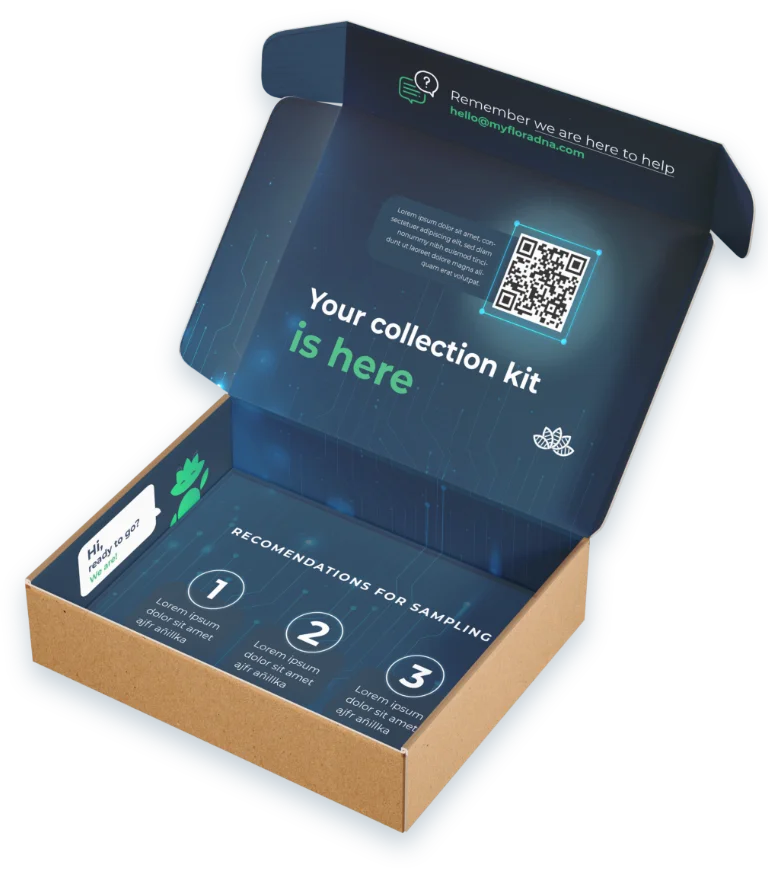
Check Box Content
- Punch Vials
- One return label
- One instruction guide
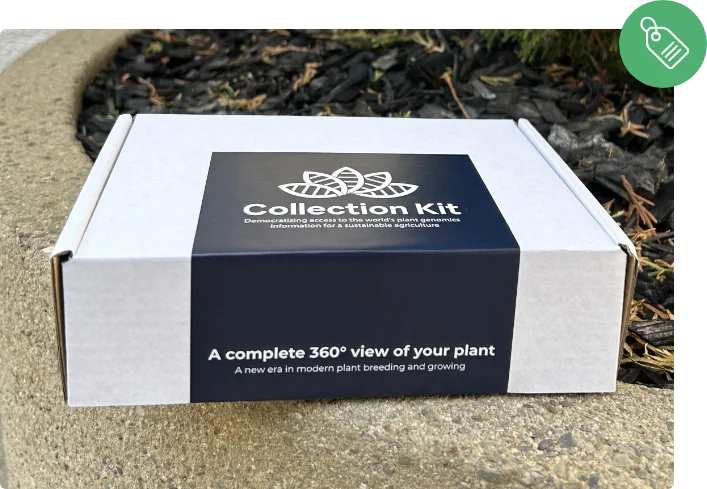
Collect Your Samples
For optimal accuracy we recommend sending in both roots and leaf tissue samples for analysis.
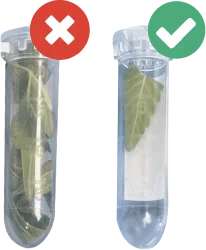
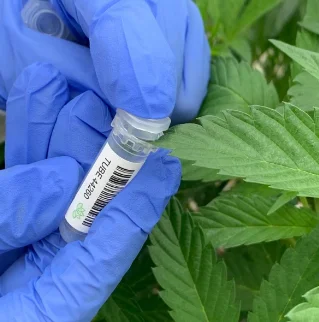
Leaf Tissue
Gather leaf tissue from various parts of the plant, as
shown in the picture(s).
Ensure the samples are free from any chemicals or
recent treatments (wait at least one week after
chemical application before collecting samples).
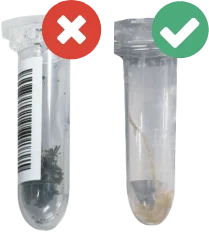
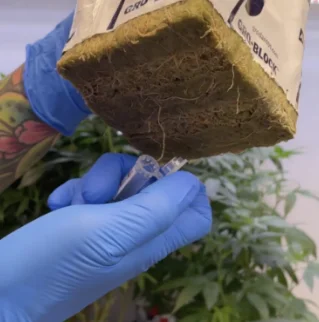
Root Tissue
Collect two (2) pieces of root tissue, each approximately 2cm long.
Ensure the root samples are free from any soil or growing medium. If necessary, rinse the roots with water only to remove soil or medium.
Note that roots with excessive soil or medium can pontentially lead to false positives.
Tutorial
This step is crucial to ensure accurate test results // This step is crucial to ensure accurate test results // This step is crucial to ensure accurate test results // This step is crucial to ensure accurate test results //
Submit Sample Information
Next, double-check your spreadsheet within the CLOUD summary to ensure you’ve properly registered all your samples.
Return Your Samples
Once you’ve collected your samples, make sure the vial is properly closed, put them into the box, and return it to our headquarters.
Please use the return label provided to send us back the box with your samples. This enables us to display the status of your order within your MyFloraCLOUD Order Dashboard.
We will keep you updated!
You will receive automated email updates and get notified when your samples’ results are available on your MyFloraCLOUD Dashboard.
You can easily access and analyze your results to gain valuable insights into your plant’s health and development.
Frequently Asked Questions
Everything you need to know to test your plants with us.
What tissue should I sample?
We recommend sampling roots and young leaves.
Why roots and young leaves?
Roots are optimal for root pathogens, while both roots and young leaves are optimal for systemic pathogens such as HLVd.
What tissue should I avoid?
Avoid senescent, damaged, or heavily stressed tissue.
Should I sample early or after symptoms worsen?
Early sampling provides the most actionable information.
Can I pool samples?
Yes, pooling can be used for initial screening, so long as sample collection instructions are followed properly.
When should pooling be avoided?
Pooling is not recommended for mother plants, breeding stock, tissue culture lines, or IP-critical genetics.
How often should plants be tested?
Mother plants every 4–6 weeks; tissue culture lines before release; new genetics upon arrival.