


















Since its initial identification in cannabis plants in Santa Barbara, CA (Bektaş et al., 2019), Hop Latent Viroid (HLVd) has been detected in cultivation sites across the state.
It presents growers with a new set of challenges that threaten the health and productivity of their crop. In this article, we’ll take a quick look at HLVd, how it spreads, briefly touch on how the viroid operates within cannabis plants, and then cover defensive strategies growers can implement.
Viroids, a group of minuscule pathogens, boast an impressive smallness — typically measuring around 40 nanometers (nm). This diminutive size is attributed to their simplicity: a viroid consists of a short, single strand of circular RNA, lacking the protective protein coat (capsid) commonly found in viruses. Because of their size, viroids can easily infiltrate our plants’ systems and induce severe diseases such as HLVd, making them a substantial concern in agriculture and, more notably, in cannabis cultivation. The stealthy nature of their compact structure allows viroids to evade numerous defense mechanisms employed by their host organisms, resulting in rapid multiplication and wide dissemination.
But how is HLVd spread?
- Vegetative propagation. Cuttings from infected mother plants are likely to harbor the viroid. Viroid particles present in clones will proliferate and progressively hamper clone growth throughout its entire life.
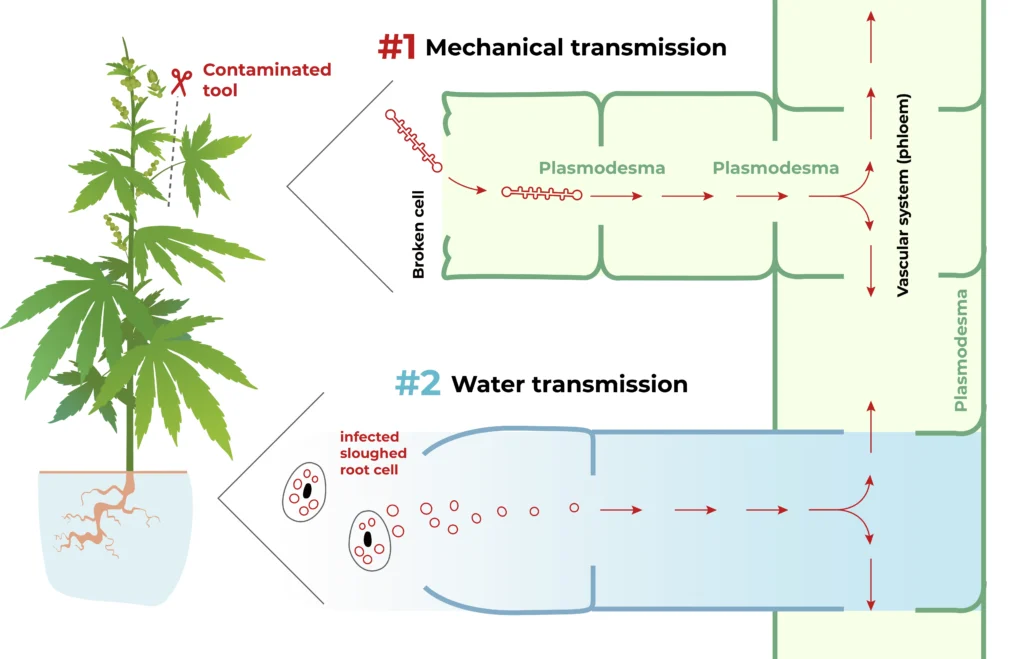
- Mechanical transmission. Cultural practices involving contaminated tools and physical contact between infected and non-infected plants in close proximity are likely to contribute to transmission. For example, a cultivator may prune an infected plant and then fail to properly sterilize their shears before pruning an uninfected plant — or brush against infected and uninfected plants in quick succession while walking through a densely packed grow.
- Water transmission. Growing conditions where water passes directly from infected plant roots to neighboring plant roots may play a role in HLVd transmission.
- Seed transmission. Seeds produced by infected plants may harbor viroid particles, which can proliferate upon germination and during the growth of the plant.
- Vector transmission. Phloem-feeding pests have demonstrated the ability to transmit viroids from plant to plant, underlining the importance of integrated pest management practices.
How does HLVd actually affect cannabis plants?
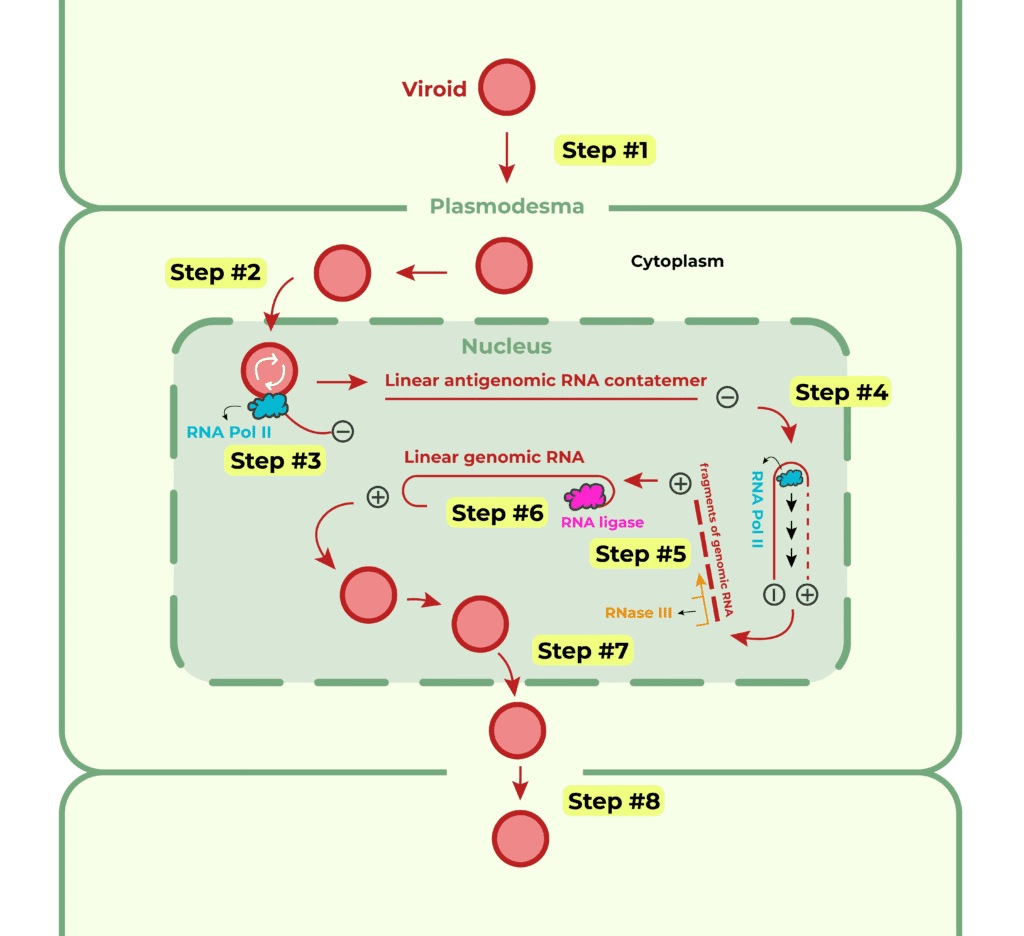
When this viroid enters the cells of a host plant like cannabis, it replicates by taking over the plant’s own genetic machinery (Wang, 2021). This leads to a disruption in the normal functioning of the plant’s genes (Štajner et al., 2019; Gómez, 2022). Depending on the plant’s age and when the viroid infects it, this disruption can cause a range of troubling symptoms, ultimately resulting in a lower yield and poorer quality of the harvested crop (Warren et al., 2019; Fernandez et al., 2023).
As time goes on, the viroid multiplies and moves from the point of entry to other parts of the plant through the vascular system (Fernandez et al., 2023). If not controlled, it can also spread to other plants within the cultivation facility.
In the early stages of infection, it’s challenging to detect symptoms because viroid levels are low — hence the “latent” part of the viroid’s name. However, as the amount of viroid increases, more of each plant gets infected, and a larger proportion of the plant population becomes infected, leading to a greater impact on the grower’s crop.
What can be done to combat HLVd?
There are many ways for cultivators to mitigate the risks associated with HLVd. From our lab to you, here is what we suggest:
- Test your mother plants before propagation. Ensure you’re not producing clones from an infected mother plant. Consider sending tissue samples for viroid detection or setting up your own viroid detection assays in-house.
- Test plants regularly throughout their lifecycle. Screen your plants at various points in their life to identify problems early. Infected plants should be removed, quarantined, monitored, or destroyed to prevent further spread.
- Properly sterilize all tools and equipment. Use a dilute bleach solution (3 parts bleach to 7 parts water) to sterilize tools and surfaces that come into contact with plant tissue. Sterilize equipment every time it’s used to prevent transmission.
- Wear a fresh set of gloves. Use disposable nitrile or latex gloves and change them between handling different plants. Disinfect gloves with the bleach solution for added protection.
Bottom line
Although the threat of HLVd continues to loom over the cannabis industry, the properly educated cultivator has little to fear. With the right skills, mindset, and tools, the challenges this pathogen poses can be effectively mitigated.
Like any other pathogen, HLVd can be mitigated through prevention, verification, and swift action.
Start with your mother plants
Send tissue samples for RT-qPCR viroid detection and know your genetics are clean before you propagate.