


















In cannabis cultivation, disease outbreaks represent a formidable challenge for growers.
Pathogens, lurking at all stages of growth, continuously threaten to compromise plant health and yield potential (Gwinn et al., 2022). Fungal infections caused by species from genera like Botrytis and Fusarium have emerged as significant threats. This article delves into the different species of these genera, highlighting the unique symptoms they induce in cannabis plants. Understanding these variations is pivotal for effective disease management.
Botrytis: the gray mold fungus and its counterparts
Botrytis cinerea, notorious for causing gray mold, stands as a prominent pathogen capable of inflicting rapid and catastrophic damage on cannabis crops globally (Balthazar et al., 2022). This airborne necrotrophic pathogen produces a diverse range of symptoms, often leading to crop devastation within a mere week. While B. cinerea is the primary species most recognized for infecting this crop, its counterpart Botrytis pseudocinerea also poses a threat to inflorescences — though it displays lower aggressiveness. Additionally, Botrytis porri has been identified in cannabis, but its pathogenicity remains secondary (Mahmoud et al., 2023).
Botrytis symptoms and spread
B. cinerea‘s impact as a pathogen is undeniable, leading to die-back, tissue necrosis, seedling damping-off, stem canker, and yield reductions in inflorescences (Mahmoud et al., 2023). Both B. cinerea and B. pseudocinerea can target the upper sections of the plant like inflorescences, and occasionally infiltrate the petiole or stem. Gray to white mycelium and Botrytis-like conidiophores frequently emerge from the infected tissue, rapidly inflicting significant harm (Garfinkel, 2020).
You should be aware of these symptoms:
- Grayish-brown fuzzy growth: one of the hallmark signs of Botrytis infection is the development of grayish-brown fuzzy growth on various parts of the plant, such as inflorescences, leaves, buds, and stems.
- Bud rot: Botrytis-infected buds often turn brown, with a mushy texture. The fungus infiltrates the buds, leading to a musty smell and eventual decay.
- Necrosis and leaf spotting: infected leaves develop necrotic spots and start to wither, impacting the overall health of the plant.
Fusarium: a threat to cannabis health
Fusarium, a versatile genus of fungi including some pathogens, emerges as one of the most destructive forces affecting cannabis. Particularly impactful during root and vegetative growth phases, Fusarium infections lead to reduced plant quality and, at times, complete plant loss. The consequences extend even to postharvest, marked by mycotoxin production that further diminishes the crop’s value (Gwinn et al., 2022).
The spectrum of Fusarium species
The Fusarium genus presents a diverse range of species with the potential to significantly damage cannabis. These diseases manifest in various forms, often linked to vascular wilts, seedling damping-off, crown and lower stem rot, root and seed decay, as well as head and grain blights (Punja, 2021). While Fusarium oxysporum is widely known for causing wilt in cannabis, there are other species to consider. A closer examination of prevalent species and their symptoms reveals the complexity of their impact.
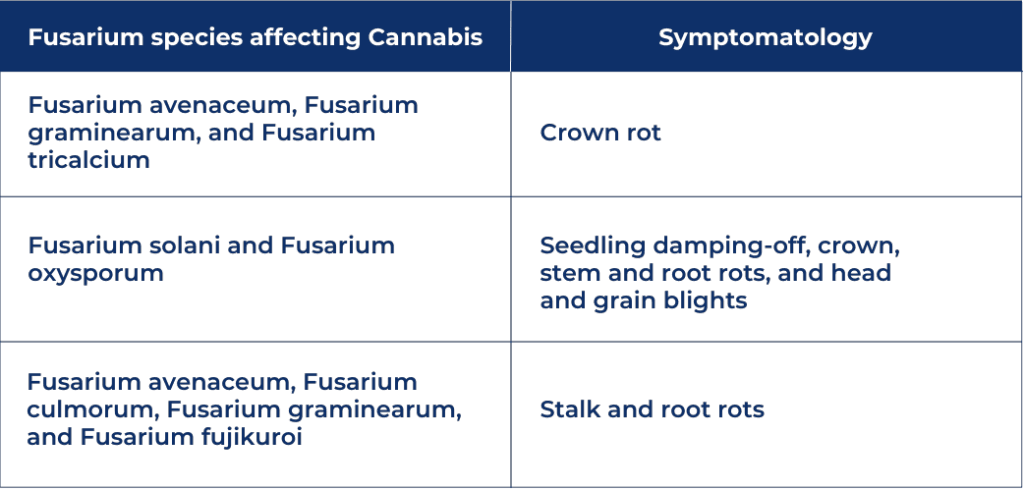
Some of the typical symptoms of Fusarium infection in cannabis can be:
- Wilting and yellowing: Fusarium-infected plants exhibit wilting and yellowing of leaves, a result of the fungus obstructing water transport in the vascular system.
- Stunted growth: plants infected with Fusarium may experience stunted growth due to reduced nutrient and water uptake.
- Damping-off: seedlings appear weak and withered, exhibiting lesions on the stem that cause a sinking effect and a water-soaked appearance at ground level. The most distinctive feature is the complete collapse of the stem onto the ground.
Distinguishing between Fusarium and Botrytis species
Effectively distinguishing between Fusarium and Botrytis species is paramount to accurate disease management for cannabis crops. While both genera present unique challenges, their symptoms and characteristics can differ significantly. Fusarium infections are often associated with wilting, yellowing, and stunted growth, alongside the potential for damping-off in seedlings and various rot types (Gwinn et al., 2022). Botrytis infections, on the other hand, manifest as grayish-brown fuzzy growth, bud rot, necrosis on leaves, and characteristic damage on inflorescences (Balthazar et al., 2022).
Why it matters
Misdiagnosing an infection can precipitate misguided treatment strategies, ultimately resulting in serious crop losses and economic setbacks. Equipping cultivators with information about the distinctive symptoms of each species empowers better decisions in disease management.
Yet, beyond awareness, the cornerstone of effective disease control lies in accurate diagnostic testing. Testing sites play a pivotal role in offering accurate diagnostics, allowing cultivators to identify the specific species responsible for infections and tailor their management strategies accordingly.
Beyond awareness, the cornerstone of effective disease control lies in accurate diagnostic testing.
As the cannabis industry continues to evolve, a comprehensive understanding of these fungal pathogens will contribute to the overall success and sustainability of cannabis cultivation practices.
Don’t guess between gray mold and wilt
Molecular testing identifies the exact species behind an infection — so your treatment matches the actual pathogen.